

About Course
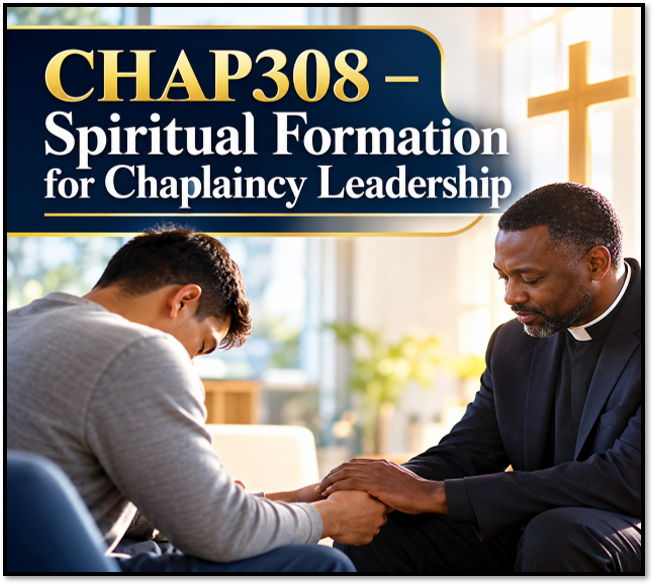
CHAP308 – Spiritual Formation for Chaplaincy Leadership
Credit Hours: 3 Semester Hours
Required Texts & Resources
Primary Text:
Nouwen, Henri J.M. Spiritual Formation: Following the Movements of the Spirit.
Supplemental Resources:
- Holy Bible (student’s preferred translation)
- Selected journal articles and instructor-provided readings on chaplaincy leadership, pastoral care, spiritual disciplines, and Christian formation
- Reflective journaling materials
Course Description
This course explores the biblical, theological, and practical foundations of spiritual formation for effective chaplaincy leadership. Students examine the transformative work of the Holy Spirit in personal faith development, character formation, and vocational ministry. Emphasis is placed on cultivating spiritual disciplines, emotional and spiritual health, servant leadership, pastoral presence, ethical integrity, and self-awareness within diverse chaplaincy settings. Through reflection, prayer, Scripture study, and leadership application, students develop a sustainable framework for lifelong spiritual growth and ministry effectiveness.
Learning Objectives
Upon successful completion of this course, students will be able to:
- Explain the biblical and theological foundations of spiritual formation.
- Examine the role of the Holy Spirit in the development of Christian character and leadership.
- Evaluate the relationship between spiritual formation and effective chaplaincy ministry.
- Practice and assess various spiritual disciplines that contribute to personal and professional growth.
- Analyze Henri Nouwen’s perspective on spiritual formation and its relevance to chaplaincy leadership.
- Demonstrate increased self-awareness regarding personal strengths, weaknesses, values, and vocational calling.
- Apply principles of servant leadership within military, healthcare, correctional, educational, and community chaplaincy contexts.
- Develop strategies for maintaining spiritual resilience, emotional health, and ministry effectiveness.
- Integrate theological reflection into pastoral care and crisis-response situations.
- Construct a personal spiritual formation plan for continued leadership development and ministry practice.
Course Content
CHAP308 – Spiritual Formation for Chaplaincy Leadership
Student Ratings & Reviews